


Every child grows and develops at their own pace, but one of the most exciting parts of early childhood is watching them learn new skills every day. From taking their first steps to holding a crayon, each milestone reflects important stages of physical and cognitive development. Two of the most essential areas of development are fine motor skills and gross motor skills. While they serve different purposes, both are equally important in helping children become confident, independent, and ready for everyday life.
Understanding the difference between fine motor and gross motor skills can help parents recognize how their child is developing and identify when additional support may be beneficial. These skills are closely connected, and together they form the foundation for learning, communication, self-care, and overall well-being.
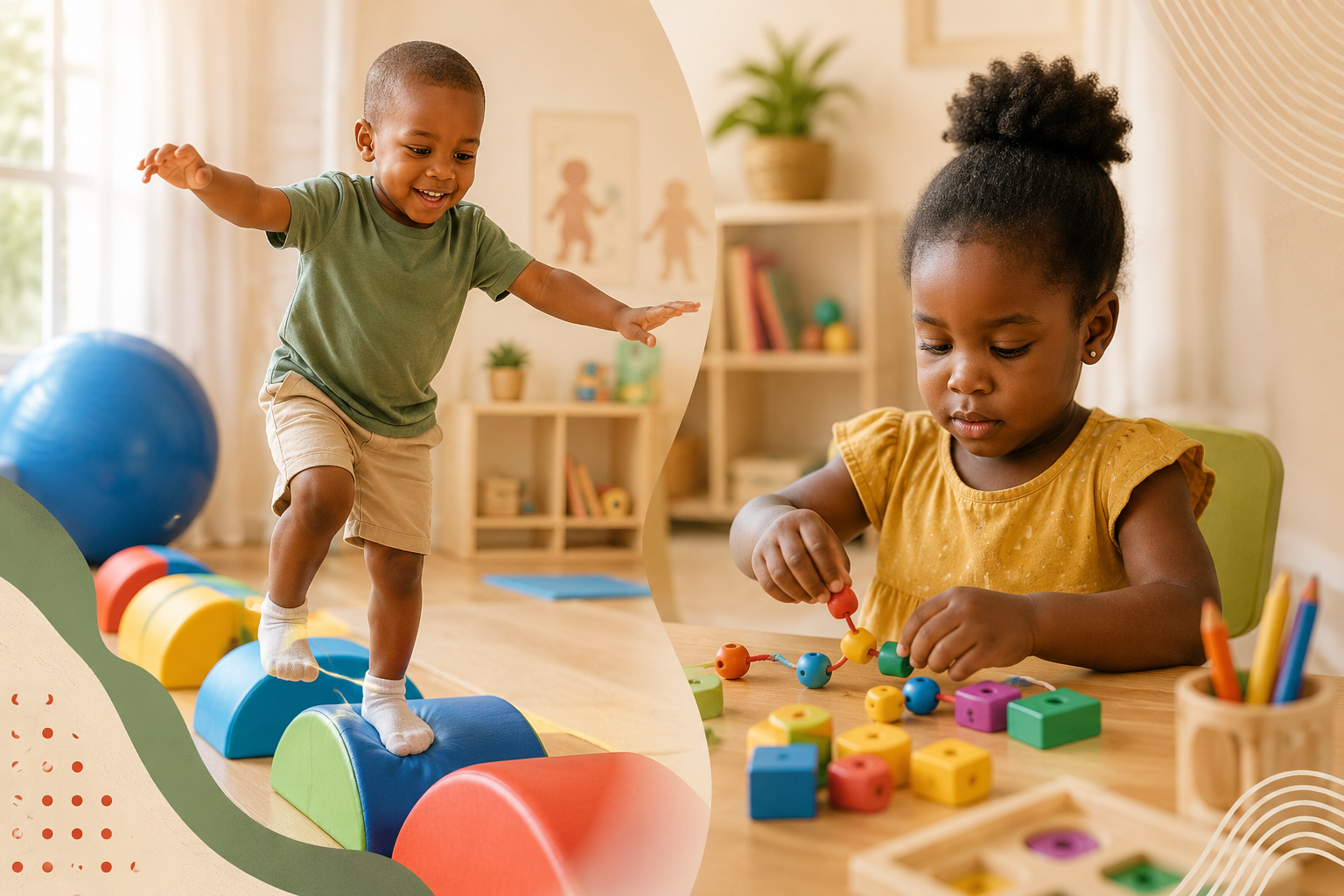
Gross motor skills involve the large muscles of the body that control movements such as sitting, standing, crawling, walking, running, jumping, climbing, and maintaining balance. These movements enable children to explore their surroundings, participate in play, and build strength, coordination, and confidence. During infancy and the toddler years, children gradually develop these abilities as they become more active and independent. Every new movement contributes to stronger muscles, improved posture, and better coordination, all of which are essential for healthy physical development.
Fine motor skills, on the other hand, involve the smaller muscles in the hands, fingers, wrists, and eyes. These skills allow children to perform more precise movements such as picking up small objects, turning the pages of a book, drawing, coloring, buttoning clothes, feeding themselves with utensils, and eventually writing. Although these actions may seem simple, they require a high level of coordination, muscle control, and concentration. Strong fine motor skills help children succeed both at home and in school by supporting tasks that require accuracy and independence.
As children grow, fine motor and gross motor skills develop alongside each other. A child who has good core strength and balance is often better able to sit comfortably while drawing or writing. Similarly, strong hand muscles and coordination make it easier for children to explore their environment through play and daily activities. These two areas of development are interconnected, and progress in one often supports growth in the other.
Parents play an important role in encouraging both types of motor development through everyday experiences. Simple activities such as playing with building blocks, drawing, painting, stacking toys, running outdoors, climbing at the playground, dancing, throwing a ball, or participating in imaginative play all help strengthen motor skills while making learning enjoyable. Children learn best through play, and every opportunity to move, create, and explore contributes to their physical and cognitive development.
While every child develops differently, there are times when delays in motor skills may become noticeable. A child who struggles to balance, frequently falls, avoids physical activities, has difficulty holding a pencil, cannot manipulate small objects, or finds everyday self-care tasks challenging may benefit from a professional developmental assessment. Identifying these challenges early allows children to receive the support they need before difficulties begin to affect their confidence, learning, or independence.
Early intervention can make a significant difference in helping children strengthen both fine and gross motor skills. Individualized therapy programs are designed to meet each child’s unique developmental needs, using engaging and age-appropriate activities that promote movement, coordination, strength, and confidence. With consistent guidance and family involvement, many children achieve remarkable progress and become more independent in their daily lives.
At Grace Empowered Early Years, we believe every child deserves the opportunity to reach their full potential. Our experienced professionals work closely with families to assess developmental needs and provide personalized intervention programs that support physical, cognitive, and emotional growth. By creating a nurturing and encouraging environment, we help children build the skills they need to thrive at home, in school, and within their communities.
Every milestone, no matter how small, is an important step in a child’s journey. Whether a child is learning to take their first steps, hold a spoon, write their name, or confidently participate in play, developing strong fine motor and gross motor skills lays the foundation for lifelong learning and independence. With early support, patience, and the right guidance, every child has the opportunity to grow with confidence and achieve their greatest potential.