

Every child is unique. Children have different personalities, interests, abilities, communication styles, backgrounds and ways of learning. Creating an inclusive early learning environment means recognising these differences and making sure every child has opportunities to participate, learn, express themselves and feel that they belong.
Inclusion is not about expecting every child to learn in exactly the same way. It is about creating supportive experiences where children can participate in ways that work for them.
At Grace Empowered Early Years, we believe that every child deserves to feel welcomed, respected, valued and supported as they grow and learn.
What Does Inclusive Learning Mean?
Inclusive learning means creating an environment where children can take part in learning and play regardless of their individual needs or differences.
For young children, inclusion can be reflected in many everyday experiences. It can mean providing different ways to participate in an activity, using a variety of communication methods, offering additional support when needed or simply making sure every child feels accepted by the people around them.
An inclusive environment recognises that children may reach developmental milestones in different ways and at different times.
Every Child Has Their Own Way of Learning
Some children may love talking and participating in group discussions. Others may prefer to observe before joining in.
Some children may enjoy drawing, while others learn through movement, music, building or imaginative play.
Providing different ways for children to engage gives them opportunities to discover what they enjoy and how they can express themselves.
Instead of asking, “Why isn’t this child doing it the same way as everyone else?” an inclusive approach encourages us to ask, “What can we change or provide to help this child participate?”
This small change in perspective can make a meaningful difference.
Creating a Sense of Belonging
Children learn best when they feel safe, accepted and connected.
A sense of belonging can be created through simple everyday actions. Greeting children warmly, listening to their ideas, including their interests in activities and celebrating their contributions can help children understand that they are valued members of the group.
Children should be able to see themselves reflected in their learning environment.
Books, pictures, toys, songs and activities can represent different families, cultures, abilities and experiences. This can help children recognise that differences are a natural and valuable part of the world around them.
Adapting Activities for Different Needs
An activity does not always need to be changed completely to make it more inclusive.
Small adjustments can help children participate more comfortably.
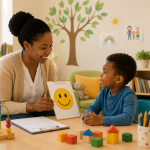
For example, during a drawing activity, some children may prefer crayons while others may benefit from larger drawing tools. During a group activity, some children may participate by speaking while others may communicate through gestures, pictures or demonstrations.
During physical activities, children can be offered different ways to participate based on their individual abilities.
The goal is to create opportunities for participation rather than focusing only on one expected way of completing an activity.
Encouraging Children to Make Choices
Giving children choices can help develop independence and confidence.
Instead of always telling children exactly what to do, adults can provide simple choices.
For example:
“Would you like to draw or build?”
“Would you like to read this story or that one?”
“Would you like to sit here or over there?”
Simple choices allow children to communicate preferences and take an active role in their learning.
Using Play to Encourage Inclusion
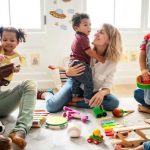
Play is an important part of early childhood learning, and it can provide wonderful opportunities for children to interact with one another.
Adults can encourage children to play together, share ideas and solve simple problems as a group.
Activities such as building blocks, pretend play, music, art and outdoor games can be adapted so that children with different interests and abilities can participate.
The focus should be on creating opportunities for interaction, exploration and enjoyment.
Helping Children Understand Differences
Inclusive learning is also about helping children understand and appreciate differences.
Children naturally notice differences between people. Adults can respond to their questions honestly and positively, using language that is simple and appropriate for their age.
Instead of avoiding conversations about differences, we can help children understand that people may communicate, move, look, learn or experience the world in different ways.
Books and stories can also introduce children to different cultures, families, abilities and life experiences.
These conversations can help children develop respect, kindness and curiosity.
Working Together With Families
Families play an important role in creating inclusive experiences.
Parents and caregivers know their children well and can provide valuable information about their interests, communication, strengths and support needs.
Open communication between families, educators and support professionals can help everyone understand how best to support a child.
Working together also helps create consistency between home and early learning environments.
Focusing on Strengths
An inclusive approach focuses not only on the areas where a child may need support but also on their strengths and interests.
A child may have difficulty communicating verbally but have a strong interest in music. Another child may find group activities challenging but be highly creative during individual play.
Recognising these strengths can provide opportunities for children to build confidence while developing other skills.
Every child has something valuable to contribute.
Creating an Environment Where Every Child Can Thrive
Inclusive learning does not require everything to be perfect. It requires adults to be willing to listen, observe, adapt and learn.
When children are given appropriate support and opportunities to participate, they can develop confidence, independence, communication skills and positive relationships with others.
An inclusive environment sends an important message to children:
“You belong here.”
“You are valued.”
“Your ideas matter.”
“You can learn in your own way.”
Inclusion Begins With Everyday Moments
Creating an inclusive early-years environment is not limited to special programs or specific activities. It happens through everyday interactions.
It can be seen in the way we welcome a child, listen to their ideas, adapt an activity, introduce diverse stories, encourage friendships and work together with families.
When we make space for every child, we create learning environments where children can explore their strengths, develop new skills and feel confident being themselves.
At Grace Empowered Early Years, we believe that every child deserves opportunities to learn, play, connect and grow in an environment where they feel respected and included. By embracing each child’s individuality, we can help create stronger foundations for learning, relationships and lifelong development.