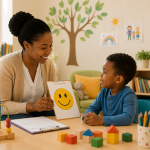




A child touching a toy, picking up an object, climbing a step, or responding to a simple instruction may look like an ordinary moment. But for a developing child, these everyday activities can create valuable opportunities to build a range of skills.
Child development does not happen in separate areas. Physical movement, communication, attention, understanding, coordination, and independence are often connected. A single activity can provide opportunities for a child to work on several of these skills at the same time. This is why meaningful activities and everyday interactions can be such an important part of early intervention.
Building fine motor skills can begin with simple movements such as touching, reaching, grasping, and picking. When a child is encouraged to touch or pick up an object, they are learning how to control their hands and fingers while coordinating their vision and movement. With regular opportunities to practise, these small movements can gradually become more controlled and purposeful.
At the same time, the activity can help us understand how the child processes and responds to language. Asking a child to touch a particular object allows us to observe whether they understand the instruction, recognise the object, maintain attention, and respond appropriately. This means that an activity designed around movement can also become an opportunity to support communication and language understanding.
The same principle applies to gross motor development. Encouraging a child to climb stairs can create opportunities to develop strength, balance, coordination, body awareness, and motor planning. Each movement requires the child to understand where their body is positioned and how to coordinate their movements to reach the next step. With appropriate support and consistent practice, a child can gradually become more confident in their ability to move.
Movement can also create opportunities for communication. During an activity, simple instructions such as “touch the ball”, “pick it up”, “give it to me”, or “step up” can encourage children to listen, understand, process, and respond. These interactions can make developmental activities more meaningful because the child is not simply completing a physical task; they are engaging with another person and learning through the experience.
Repetition is another important part of development. Children may need to experience the same movement or activity many times before they become comfortable and confident with it. Repetition provides an opportunity to practise a developing skill without placing unnecessary pressure on the child. What may seem like a repeated small activity to an adult can be an important learning experience for a child.
It is also important to recognise attempts, not just completed tasks. A child reaching towards an object, trying to climb a step, looking towards something when it is named, or attempting to communicate can all be meaningful signs of participation and development. Progress is not always immediately visible, but small changes can provide the foundation for future skills.
Every child has different abilities, interests, challenges, and ways of learning. An activity that motivates one child may not have the same effect on another. Personalised early intervention allows activities to be adapted to the individual child so that learning can happen in a way that is comfortable, engaging, and meaningful.
At Grace Empowered Early Years Foundation, we believe that everyday moments can become opportunities for growth. Through personalised support, therapy, education, and collaboration with families, we aim to help children build skills that can support their participation and independence in everyday life.
There is no single activity that creates development overnight. It is the consistent combination of small movements, repeated experiences, meaningful interactions, encouragement, and support that can help a child progress.
Every touch matters. Every attempt matters. Every step matters.
Because sometimes, what looks like a small achievement today can become the foundation for a much bigger achievement tomorrow.