

Every child is unique, and so is their journey of growth and development. From learning to communicate and build relationships to developing physical skills, managing emotions and becoming more independent, childhood is a time of continuous learning. While some children reach developmental milestones quickly, others may need additional encouragement, guidance or professional support. Understanding your child’s individual needs and providing the right support at the right time can create a strong foundation for lifelong growth.
Child development support is not limited to one area. A child’s communication, physical abilities, emotional wellbeing, learning, nutrition and everyday independence are all connected. This is why a holistic approach to early intervention for children can be so valuable. By looking at the whole child rather than focusing only on one challenge, families and professionals can create a more personalised pathway towards progress.
Understanding Your Child’s Development
Child development involves much more than physical growth. Children gradually develop communication skills, social abilities, emotional regulation, cognitive skills, coordination and independence. These areas develop at different rates, but ongoing difficulties can sometimes indicate that a child may benefit from additional support.
Parents may notice concerns around speech and language, movement, concentration, learning, behaviour, social interaction, feeding or emotional regulation. Sometimes the signs are subtle, while in other situations they may be more noticeable. A developmental assessment for children can help families understand their child’s strengths and identify areas where additional support may be helpful.
The purpose of an assessment is not simply to identify difficulties. It is about understanding the child as a whole and creating a clear, personalised approach that supports their development.
The Importance of Early Intervention
The early years provide important opportunities for children to develop foundational skills. When developmental concerns are identified early, children can receive support that is suited to their individual abilities and goals.
Early childhood intervention can support children with communication, movement, learning, emotional regulation, social skills and everyday activities. Early support can also give parents practical strategies that they can use at home, making development a continuous process rather than something that happens only during therapy sessions.
Every child responds differently to intervention, which is why personalised care is essential. The right approach should recognise what a child can already do, understand where they need support and build realistic goals around their individual needs.
Supporting Communication and Language Development
Communication is central to a child’s ability to learn, interact and express their needs. When children have difficulty speaking, understanding language or expressing themselves, it can affect their confidence and participation in everyday life.
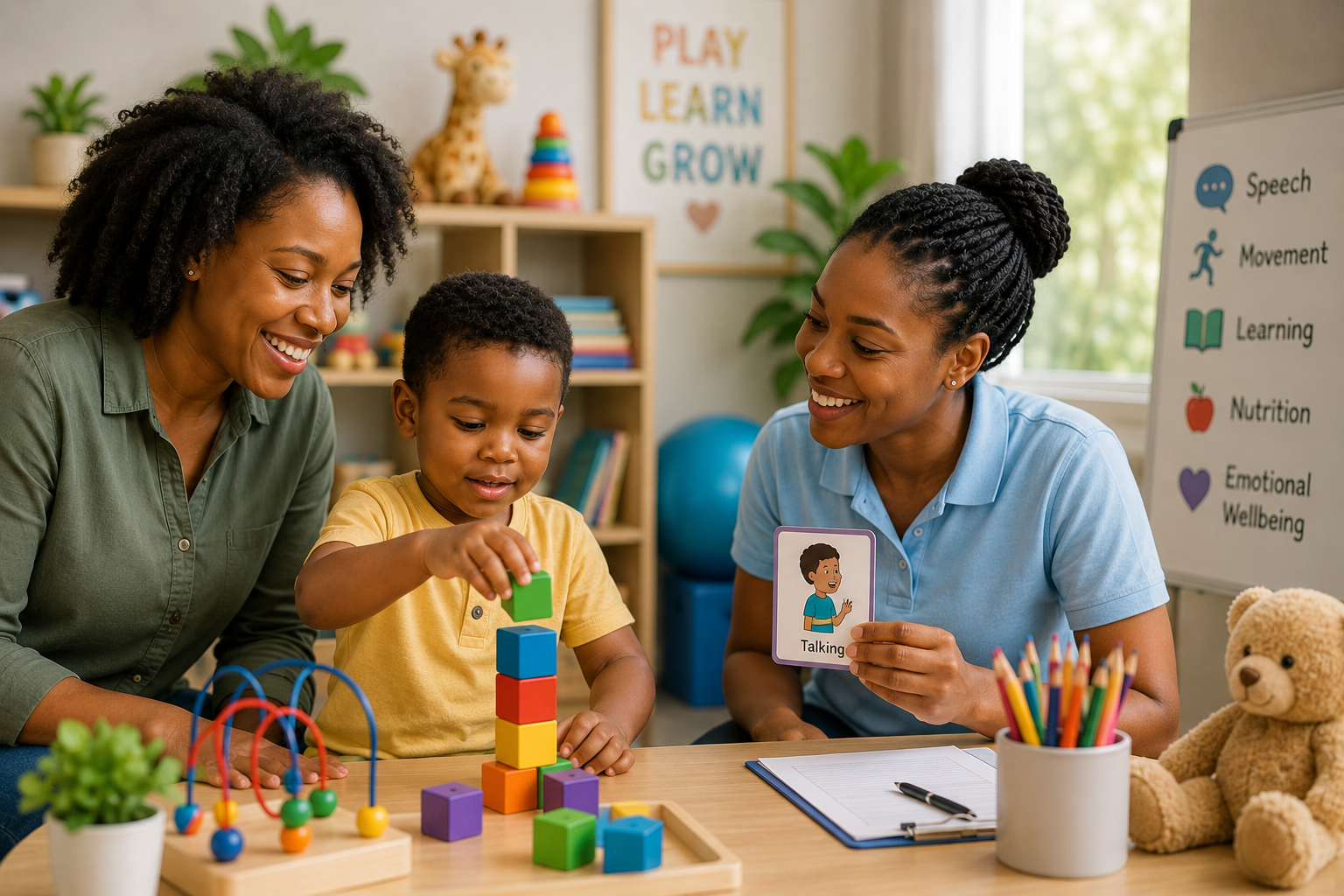
Speech and language therapy for children can help develop communication skills in a supportive and engaging environment. Speech pathologists work with children on areas such as speech sounds, vocabulary, language understanding, expressive communication and functional communication.
The goal is not simply to help a child speak more clearly. It is to help them communicate successfully and confidently with the people around them.
Building Independence Through Occupational Therapy
Growing independence is an important part of childhood. Everyday activities such as dressing, eating, writing, playing, using utensils and managing personal routines require a combination of physical, cognitive and sensory skills.
Occupational therapy for children helps develop these skills according to each child’s individual needs. Therapy can support fine motor development, coordination, sensory processing, feeding, handwriting and everyday independence.
When children begin to master activities that once felt difficult, they often develop greater confidence and a stronger sense of independence. Small achievements can become important steps towards bigger developmental goals.
Encouraging Physical Development
Physical development influences how children move, play, explore and participate in their environment. Some children may experience difficulties with balance, coordination, strength, posture or movement.
Paediatric physiotherapy can provide targeted support to help children improve their physical abilities. Through enjoyable, goal-focused activities, physiotherapists can work with children to develop movement skills and physical confidence.
Supporting physical development is not only about exercise. It is about helping children participate more comfortably in play, education, family activities and everyday experiences.
Supporting Learning and Educational Growth
Children learn in different ways and at different speeds. Some may need additional support with foundational learning skills, attention, communication, confidence or academic tasks.
Educational support for children can provide personalised learning strategies that match a child’s individual abilities. A supportive learning environment can help children develop important academic foundations while also encouraging confidence and motivation.
When children feel supported rather than pressured, they can become more willing to explore new ideas, practise challenging skills and celebrate their progress.
Emotional Wellbeing Matters Too
A child’s emotional wellbeing is just as important as their physical and academic development. Children may experience frustration, anxiety, changes in behaviour, difficulty managing emotions or challenges with social interaction.
Psychological therapy for children can provide a safe and supportive space where children can express their feelings, understand their emotions and develop healthier ways of coping with challenges. Child-centred therapy can also support self-regulation, resilience, confidence and positive relationships.
Supporting emotional development from an early age can give children valuable skills that they can carry into school, relationships and later stages of life.
The Role of Nutrition in Child Development
Healthy development also begins with appropriate nutrition. Children need balanced nutrition to support growth, energy and overall wellbeing. However, some families may experience challenges around food preferences, feeding routines, nutritional requirements or healthy growth.
A paediatric dietitian can provide personalised nutrition support for children based on their individual developmental and dietary needs. Professional guidance can help families understand their child’s nutritional requirements and make practical choices that support healthy growth.
Nutrition should be viewed as part of the wider developmental picture rather than as a separate concern. When appropriate nutrition is combined with therapy and developmental support, families can take a more complete approach to their child’s wellbeing.
Families Are at the Heart of Development
Professional therapy is only one part of a child’s developmental journey. Parents and caregivers play an essential role because much of a child’s learning happens through everyday experiences at home.
Family support and guidance can help parents understand their child’s needs and learn practical strategies to encourage communication, independence, emotional regulation, learning and healthy routines. When families and professionals work together, children can receive more consistent support across different environments.
Parents should also remember that progress does not always happen in a straight line. Some days may bring noticeable achievements, while other days may feel slower. Every new skill, increased attempt, improved interaction or moment of independence can be meaningful progress.
A Holistic Approach to Child Development
Supporting a child’s development requires more than focusing on a single area. Communication can influence learning. Emotional wellbeing can influence social participation. Physical abilities can influence independence. Nutrition can support healthy growth. Each part of development contributes to the bigger picture.
A holistic child development approach brings these areas together and allows professionals and families to work towards meaningful goals based on the child’s individual needs.
Whether a child needs speech and language therapy, occupational therapy, physiotherapy, psychological therapy, educational support, nutrition guidance or developmental assessment, the focus should always remain on helping the child feel supported, understood and confident.
Helping Every Child Reach Their Potential
There is no single definition of what successful development looks like. Every child has different strengths, interests, abilities and challenges. The goal of early intervention and developmental support is not to compare children with one another, but to help each child make meaningful progress from where they are.
With the right combination of early intervention, child development support, therapy, learning assistance, nutrition and emotional guidance, families can create an environment where children feel encouraged to learn, communicate, explore and grow.
Supporting your child does not mean having all the answers yourself. Seeking professional guidance when you have concerns can help you understand your child’s needs and identify practical ways to support them.
Every small step matters. Every new skill is worth celebrating. And with the right support, patience and encouragement, children can continue building the confidence and abilities they need to participate, connect and thrive.