



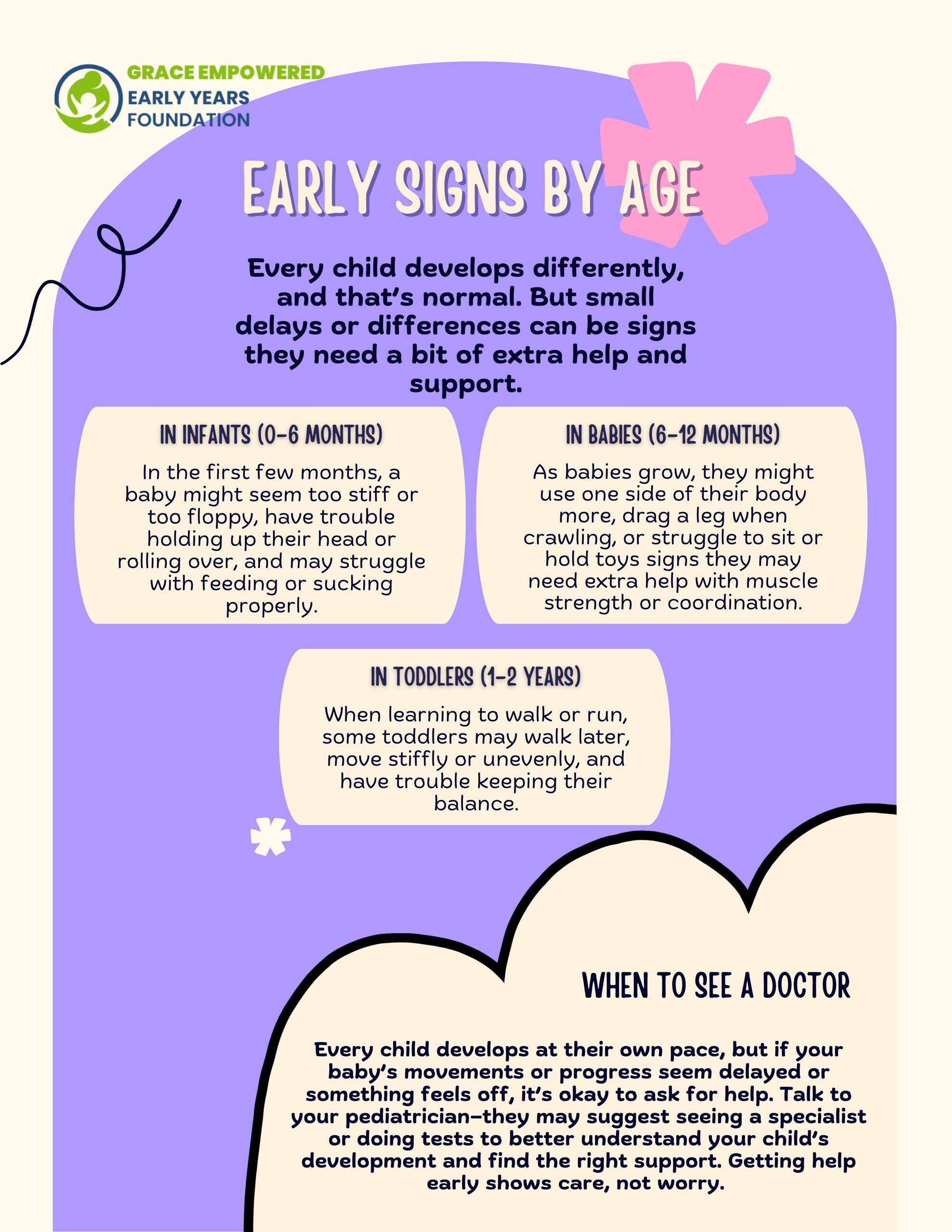
It’s normal for children to develop differently, but recognizing early signs of delay can make a big difference. This guide explains what to look for in infants, babies, and toddlers—and how early intervention can support healthy development and coordination.
Early Signs by Age — When to Seek Support for Your Child’s Development
When you become a parent, every smile, every roll, every wobble takes on new meaning. You hope your little one will grow and explore the world freely — and when things don’t seem quite on track, the worry sets in. But here’s the good news: recognising early signs doesn’t mean something is definitively “wrong”. It means there’s opportunity for support and positive change. With early awareness, timely help and loving guidance, children can flourish.

The Importance of Early Support
In the first years of life, a child’s brain is forming connections at a staggering pace. These early years set the foundation for everything: movement, coordination, communication, confidence. When a child shows signs of struggle or delay, early intervention can open doors to their full potential. Rather than focusing on what’s lacking, early support focuses on what’s possible.
What to Watch for — By Age
Infants (0 – 6 months)
In these early months, subtle signs can hint at muscle tone or coordination issues: a baby may seem stiff or too floppy, have difficulty lifting their head, rolling over or feeding/sucking properly. These may be early indicators that the child could benefit from additional monitoring and possibly early therapy.
Babies (6 – 12 months)
As babies begin to use more of their body and gain mobility, you might notice they prefer one side, drag a leg, struggle to crawl, or find it difficult to sit or hold toys. These are important cues of muscle strength and coordination under development.
Toddlers (1 – 2 years)
When toddlers are learning to walk or run, some may take longer, move with uneven or stiff steps, or struggle to keep balance. These may not be “just late” milestones — they can be signs that extra support (physical development, balance, coordination) could help.
Why Acting Early Matters
When support begins early, the brain is still highly adaptable. Movement, play, communication and bonding are intertwined. Each session of guided activity helps build new pathways, strengthen coordination, boost confidence. A movement that seems small today — lifting a toy, standing briefly, uttering a new word — can become the foundation for greater achievements tomorrow. By intervening in the early years, children often have better outcomes in school, social life, and their everyday independence.
What Support Looks Like
Support might include physical therapy, occupational therapy, speech-language support, or home-based intervention. In familiar environments like the child’s own home, therapy can reduce anxiety, encourage natural play, and strengthen parent-child bonding. For parents, guidance and structured programs offer tools, encouragement and hope. Rather than viewing delays as a permanent limitation, early support reframes the journey into “What’s possible next?” rather than “What’s wrong now?”
Signs It’s Time to Talk to a Doctor or Specialist
-
If your baby or toddler consistently shows one-sided movements (preferring one arm/leg) or seems unusually stiff or floppy.
-
If development seems significantly delayed (for example: not rolling, not sitting, crawling, walking when peers do).
-
If coordination, balance or muscle tone appear weak or uneven.
-
If you have concerns, don’t wait. A developmental assessment can help identify underlying needs and guide the right early years therapy program.
Final Thoughts — Hope, Love, Possibility
Remember: each child is unique and grows at their own pace. A delay doesn’t define their intelligence or future. With love, consistent support and timely intervention, children can learn, play, dream and achieve — in their own beautiful, unique way. The earlier we act, the more confident we can feel that every step, every word, every smile is moving toward a brighter future.